
A Regime Losing Grip: How The Taliban’s Incompetence Is Fueling A New Wave Of Global Jihad – OpEd
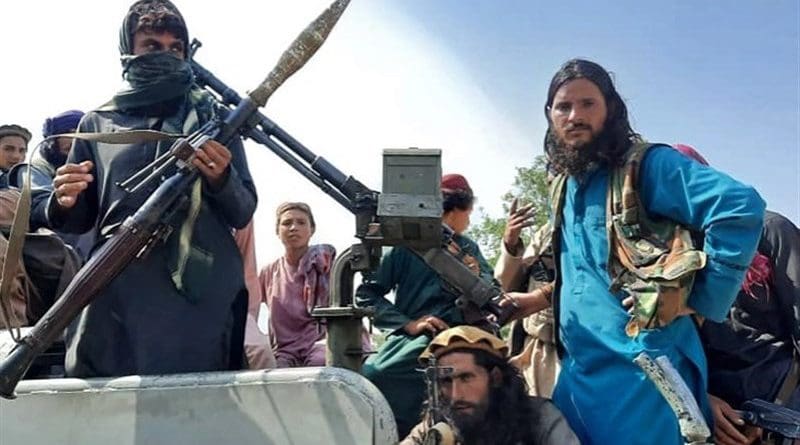
More than four years after seizing Kabul, the Taliban find themselves presiding over a country spiralling into chaos—one they can neither govern nor control. Far from bringing the “security and stability” they promised, the Taliban have unleashed a wave of anarchy that is rapidly drawing Afghanistan back into the heart of global terrorism. Their inability to rein in foreign fighters, curb extremist outfits, or protect regional neighbours exposes a regime unravelling from within.
Recent developments paint a deeply disturbing picture. The quadcopter attack against Chinese personnel in Tajikistan—originating from Afghan territory—demonstrates that militant groups now act with strategic independence. The Taliban did not authorise this attack; they simply cannot prevent such groups from orchestrating them. Even more alarming is the revelation that an Afghan national who killed two National Guard soldiers in Washington D.C. was in active communication with Afghanistan-based militant networks. The Taliban no longer simply host terrorist groups—they are the epicenter of a global militant ecosystem.
What makes the situation unprecedented is the sheer density of foreign fighters now concentrated inside Afghanistan. The UN estimates around 13,000 foreign militants—spanning TTP, ISKP, Al-Qaeda, IMU, ETIM, Jamaat Ansarullah and others—are entrenched within Afghan borders. ISKP has reportedly doubled its active cells since 2022. Fighters from Syria’s Idlib province, Iraq’s desert belts, and Yemen’s conflict zones have relocated to Afghanistan, drawn by its permissive environment and porous borders.
This mass influx has fundamentally altered the balance of power within the country. The Taliban’s internal cohesion is fraying. Many of their own fighters, left unemployed after the end of conflict, are joining the ranks of extremists who offer better pay, stronger ideology, and more operational freedom. The Taliban’s promise of governance has failed; their fighters see more opportunity in jihad than bureaucracy.
This deterioration is reinforced by damning assessments from the international community. Russia warns that terrorist groups in Afghanistan are preparing for cross-border infiltration, with Kunduz already serving as a staging hub for movements into Central Asia. The Taliban have neither the manpower nor the discipline to prevent such incursions. ISKP, in particular, is rapidly expanding—leveraging external funding, battlefield experience from the Middle East, and online recruitment strategies. Its rivalry with the Taliban has escalated into an open contest for ideological supremacy.
Meanwhile, Al-Qaeda remains deeply embedded. AQIS leader Usama Mahmood has openly aligned with the TTP, further knitting together Afghanistan-based extremist networks. Fighters associated with Al-Qaeda in the Arabian Peninsula (AQAP) are believed to be migrating from the Middle East to Afghanistan, where supervision is lax and opportunities for operational planning are abundant.
The Taliban’s failure is not simply analytical—it is structural. Governance has disintegrated. Ministries are dysfunctional, border controls are symbolic, and the regime is internally divided between ideological hardliners and pragmatic factions. Neither side can stem the rising tide of foreign extremists. The economy is collapsing, pushing young Afghans toward militant groups as a means of survival. Poverty is no longer just a humanitarian crisis—it is a recruitment strategy for terrorists.
The resulting anarchy is reshaping regional security. Pakistan faces an emboldened TTP operating with unprecedented freedom from Afghan soil. Tajikistan and Uzbekistan confront the threat of infiltration by ISKP and other Central Asian militants. China’s Belt and Road investments in the region are under direct attack. Russia fears Afghanistan’s transformation into a launchpad for destabilising operations in the former Soviet republics. The West, believing Afghanistan “contained,” now faces a growing threat of lone-wolf attackers radicalised by networks tied to Afghan groups. The Taliban still claim legitimacy, but they cannot control their own territory—let alone the extremist groups within it. They are no longer custodians of Afghanistan but bystanders watching it become a global jihadist sanctuary.
The world must respond accordingly. Humanitarian aid must continue, but political recognition must remain off the table. Regional states must form a coordinated counter-terrorism framework that bypasses the Taliban entirely. Border security must be strengthened, intelligence sharing enhanced, and sanctions expanded to target not only Taliban leaders but the networks facilitating foreign fighter inflows. The stakes are high. If the Taliban’s collapse into incompetence continues, Afghanistan will become the single most dangerous incubator of global terrorism for the next decade.

Like what you read?
Please consider supporting Eurasia Review. Thank you for your consideration!
