
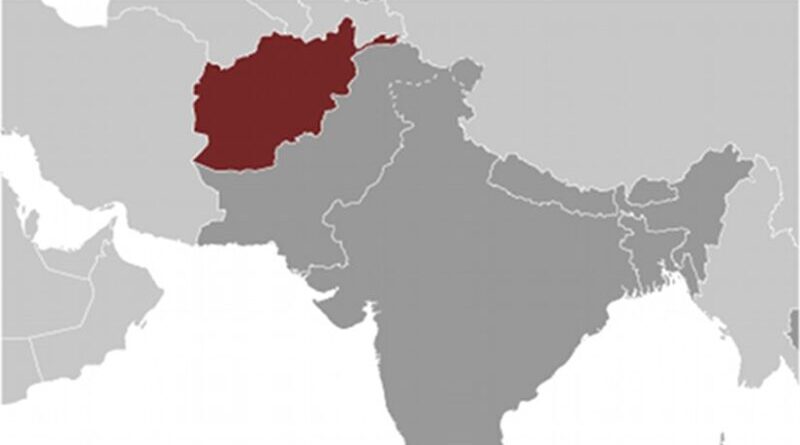
Pak-Afghan Tension And Strategic Pivot – OpEd
Pro-Taliban actors spread triumphant tribalism, and a determination not to acknowledge regional or international authority following the Taliban’s return to power in Afghanistan. However, this rhetoric is quite paradoxical to the fact that Afghanistan depends a lot on Pakistan in its vice versa relationship.
Such actors either do not see or refuse to see that Pakistan has several kinds of leverage over Afghanistan: economic, diplomatic, military, and humanitarian. Afghanistan’s fragile stability remains vulnerable as it commands no considerable strategic leverage or approval of Pakistan to prevent its fragile situation from deterioration rapidly. The following section will provide an intimate perspective into how Afghanistan’s complaints align with Pakistan’s statecraft.
It factors out Afghanistan’s economic weaknesses the kind of relationship that depicts relationship between Afghanistan and Pakistan. Afghanistan is a landlocked country which has been through constant war and conflict for the past decades or so and as a result, it highly largely on kind and trading and supply corridors corridors through Pakistan. More than 90 per cent of the commodities imported to Afghanistan, ranging from food to fuel, through the transportation networks cross Pakistani borders.
Afghanistan relies on Pakistan especially Karachi ports to fund its economy. This is because any attempt to block the transit of goods in the country, by either political feuds or intentional sanctions, well be disastrous to Afghanistan economy. This is because a simple shutdown of some borders such as Torkham or Chaman will result into highly increased prices of foods, fuel and mixes uptake of pan in the Afghan markets.
Besides trade, people of Pakistan consume humanitarian aid and medical equipment imported from overseas. Since the current humanitarian crisis is worsening in Afghanistan, the interruption of such lines significantly worsens the condition of millions of people. Thus, the essential fact that Pakistan can regulate these supply routes reveals vulnerability of Afghanistan to the former and the latter’s economic instability.
For the past year and half, they are in office again and have been diplomatically isolated in the international arena. Most western countries have not accepted their government due to reason such as; violation of human rights, oppression of women and having harsh tribal policies disguised in religion. This isolation has left Afghanistan struggling with few opportunities for diplomatic contact and thus making Pakistan the most critical ally of the nation.
While the international community has rejected the Taliban’s rule, Pakistan keeps on entertaining the Afghan capital, which keeps the Taliban at least somewhat recognized. This endeavor entails negotiating and brokering talks, negotiating Afghanistan’s communication with other nations and counties and lobbying for humanitarian help on Afghanistan’s behalf globally. If Pakistan stops supporting Afghanistan diplomatically, Afghanistan will isolate even more which will not be sustainable for the Taliban to govern.
Pro-Taliban voices often fail to grasp this nuance: The Kabul regime’s continued Taliban’s international relevance depends much on Pakistan’s willingness to provide cover for the Taliban against global condemnation. Pakistan has consistently decided to deal with Kabul no matter the cost of cooperation or affiliation, this lifeline cannot be overemphasized for the Taliban.
More so, the military strength of Pakistan provides credence to the fact that Afghanistan is in its strategic arsenal. Even though, Islamabad has not interfered directly in the affairs of Afghanistan the country still reserves the right to go on an attack of the insurgent groups in Afghanistan that poses a threat to the security of Pakistan. Terror groups such as the Tehreek-e-Taliban Pakistan ( TTP) that operate from Afghanistan have in the past been subjected to pin-point attacks and other methods employed by Pakistan.
It makes the latent military potential to act as a deterrent preventing the Taliban from shifting its allegiance to Pakistan’s averse, while at the same time, reminding the Taliban of Pakistan’s might should its sovereignty be endangered. The Taliban’s tribal bravado often overlooks this critical point: any aggression action towards Pakistan could mean that the leadership would be thrown into the basement through a military coup. Therefore, Pakistan’s cautious and diplomatic approach as a state rather than a warrior, show the strategic patience rather than showing its incapability.
After the Soviet invasion in 1979, Pakistan has been hosting millions of Afghan refugees for more than three decades offering them shelter, medical facilities and education. The current Afghan refugee crisis costs Pakistan hundreds of millions of dollars annually but Pakistan has avoided mass repatriation of refugees while many countries are now sealing the border with Afghanistan. This policy has dual and dual role and is both an expression of humanitarianism as well as powerplay.
Thus, the Pakistani government determines not only avoids a human tragedy in Afghanistan but also keeps pressure on Kabul. A forced return of refugees can lead to the escalation of conflict prevailing in Afghanistan intensified now internal conflicts, which could become an urgent problem for the Taliban. Some people with Pro-Taliban sentiments fail to capture this subtlety because they do not consider how Pakistans treatment of refugees prevents Afghanistan from falling into further chaos.
Pakistan also has its sources deep within Afghanistan as well as its conclusive Afghan diaspora, making it easier for the country to monitor Kabul’s internal machinations. This capability allows Islamabad to observe TTP and other groups hostile to Pakistan but also interact with resistances such as the NRF.
The oppositionists of Taliban factions believe that Pakistan since the early days of any struggle for political power and self-government. Nonetheless, Islamabad promotes diplomacy and reconciliation as the means to solve conflicts and, at the same time, its intelligence can sustain these groups if the Taliban do not respond to Pakistan’s demands. The ability to advance the cause of negotiation while nonetheless preserving military leverage is evident in Pakistan’s approach to Afghanistan.
While Pakistan remains relatively careful and patient as it flexes its muscles, it is now up to Afghanistan to cop on to its weakness and recognize India’s indispensability for its survival. Folk nationalism might be loud and vehement in the fair of Twitter and Tumblr, but in the real world, Afghanistan’s fate remains ensnared deeply in Pakistan’s calculations. But the fundamental realization of our current situation that is recognition of this interdependence is the first step toward a world where both America and Iraq can co-exist.

Like what you read?
Please consider supporting Eurasia Review. Thank you for your consideration!
