
Accountability And Combating Terrorism: Key Takeaways From The DG ISPR Press Conference On Pakistan’s Security – OpEd
Pakistan has been facing a reemergence of terrorism after NATO’s withdrawal, which raises security concerns again in the country. Director General of Inter-Services Public Relations (ISPR) Lieutenant General Ahmed Sharif Chaudhary, during a December 27 press conference, elaborated on the efforts of military and intelligence agencies to fight against resurgence.
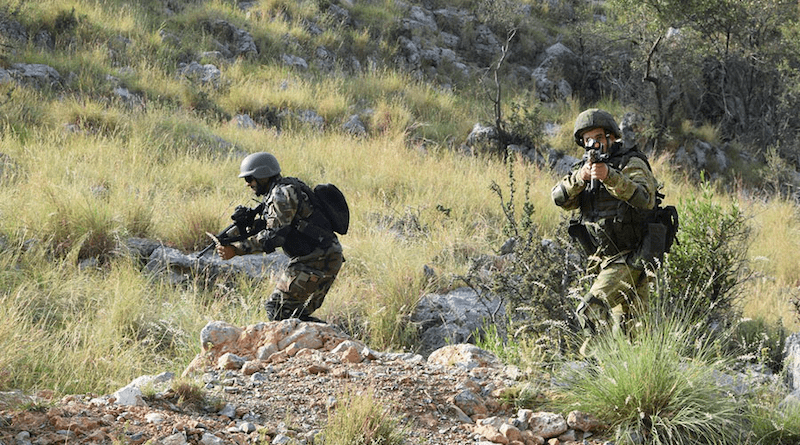
In 2024, there have been 9,775 counterterrorism operations aimed at maintaining peace and stability. Among these operations, 925 terrorists of the Fitna Al Khawarij were killed—making the highest figure in the last five years. The security forces managed to kill 73 high-value targets, including top terror leaders. Pakistan’s security establishment conducts, on average, over 179 operations on a daily basis to eliminate radicalism and terrorism.
The DG ISPR highlighted Pakistan’s strategy on Afghanistan, emphasizing the need for primary negotiation with Pakistan, not terrorist organizations like Fitna Al Khawarij- Tekhrek Taliban Pakistan (TTP). The strategy aims to redefine the narrative for Pakistan-Afghanistan ties, supporting mutual interest and stability and aims to redefine the anti-terrorism narrative for regional diplomacy. The DG ISPR also mentioned that the interim Afghan government (IAG) must prioritize relations with Pakistan over Fitna Alkhawarij–TTP.
The DG ISPR discredited the appeasement approach or engagement with terrorists by the previous administration and, specifically, the PTI chairman; it highlighted the ignorance of PTI founder Imran Khan. This comprehensive approach seeks to achieve a brighter future for both nations through strong and constructive engagement.
The law and order situation in Kurram District is deteriorating, indicating a failure of the administration and the Khyber Pakhtunkhwa (KPK) government. According to current data, violence is growing. At least 150 people have died in the last year alone. The provincial administration is under criticism for failing to address these constitutional concerns; local leaders claim that the state has failed to safeguard its citizens. Given the gravity of the situation, there is an urge for the KPK government to address administrative concerns and improve the law and enforcement mechanisms. This will help Kurram Agency in recovering stability and trust among its inhabitants.
There is no space in today’s world for anarchist politics, reflecting the recent happenings in Pakistan. The riots on November 26 are being compared to the attacks on government institutions such as the Supreme Court and Pakistan Television News in 2014. It was terrorism that wanted to destabilize the state. Fake news has significantly harmed the situation, serving as a tool for conspiracies aimed at inciting riots and undermining the legitimacy of the government.
Due to the turmoil, the Pakistan Army has officially said that no bilateral discussions would take place with the PTI since its anarchist policies undermine Pakistan’s sovereignty and peace. Professional military leadership works in all political administrations, focusing only on the security and sovereignty of the state. Political parties have been encouraged to handle their political conflicts in a more civilized way and resolve them on their own in order to ensure stability. It is believed that a more stable democracy would emerge, free of factional rivalry that aims to undermine national objectives in order to gain small power.
It is worth mentioning that during the last DG ISPR conference, the unequivocal focus was on accountability in relation to the events of May 9; the clear intent was that no one suspected of a crime should go unpunished. Legal niceties would be observed in the trial of military courts to make it clear that any other state would not coerce Pakistan’s judiciary into ruling in a certain way. The firm stand reiterates that both masterminds and perpetrators would be held accountable until justice is achieved.
Additionally, the internal accountability of the army organization was also exemplified through the case of Lt Gen Faiz himself, which, as such, represents a historically significant milestone for internal accountability within the Pakistan Army. This case showcases that justice is sought irrespective of position or stature, which is one of the key principles of the military.
In other words, the most important evidence of the relationship between Afghanistan and terrorism is precisely the reason why Pakistan should deal with its so-called national security issues, especially when selling goods across the border has suffered a worrying drop of over 30 per cent. The only viable means to attain a bright future for all is to engage in comprehensive dialogues with neighboring countries as well as allow the re-engagement of political leaders to bring peace.
The intent of the Pakistan Army with regard to dismantling terrorists and networking walk settles down to an understanding of the future policy of ensuring sustainable control and justice. Achieving peace and stability requires the active engagement of all stakeholders, and this will ensure the building of a strong and secure region devoted to its inhabitants.
Pakistan’s security situation underlines the significance of accountability and positive government. The emergence of terrorism and false news threats necessitates forceful actions to avoid impunity and undermine peace efforts. Prioritizing responsibility may restore public confidence and promote legitimacy, which is vital for national stability. Misinformation is a big concern, and a vigorous response and honest communication are required. The Pakistan Army’s efforts serve as a model for government, and a united front, rule of law, and open discourse are important for tackling national security challenges.

Like what you read?
Please consider supporting Eurasia Review. Thank you for your consideration!
