
The Haqqani Network And The Fragile Future Of Afghanistan – OpEd
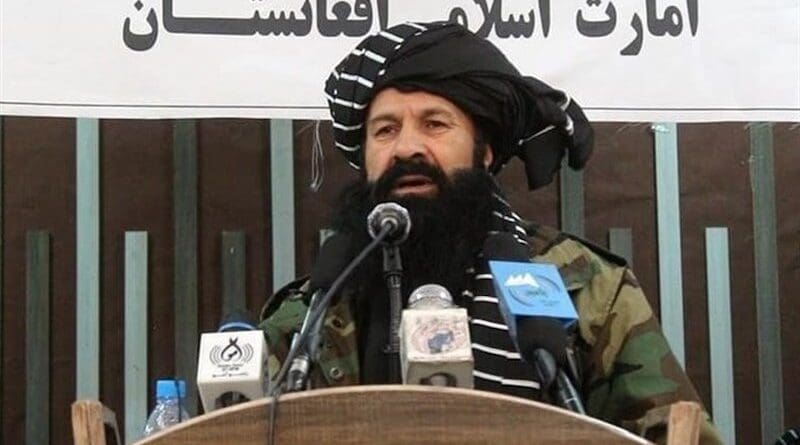
The assassination of Khalil Ur-Rahman Haqqani, a prominent figure within the Haqqani Network and the Taliban’s regime, marks a turning point in Afghanistan’s already precarious political landscape. As a key member of the Taliban’s leadership, Haqqani’s death is not merely the loss of an individual, but a symbolic fracture that threatens to unravel the unity within the Taliban and, by extension, destabilize Afghanistan. If the Haqqani Network withdraws its support from the Taliban, the ripple effects could be felt across the region, transforming Afghanistan from a fragile state into a potential epicenter of chaos once again.
The Haqqani Network’s history of brutal tactics, including suicide bombings, has made it one of the most formidable factions within the Taliban. For years, the Haqqanis have held significant sway within the group, shaping its military strategies and consolidating power in Kabul. However, the recent assassination of Khalil Haqqani has sparked rumors of growing tensions between the Haqqani faction and the Taliban’s Supreme Leader, Hibatullah Akhundzada. Reports suggest that these tensions have been escalating over the past three years, with Akhundzada’s attempts to consolidate control over the Taliban’s various factions increasingly met with resistance from Sirajuddin Haqqani, the group’s de facto military strategist.
This rift is indicative of a deeper issue within the Taliban leadership, one that threatens to unravel the fragile coalition that has allowed the group to maintain control over Afghanistan. Historically, the Taliban’s strength has relied on a delicate balance between competing factions, including the Kandahar-based leadership and the Haqqani Network. The recent cracks in this unity are deeply concerning, as a fractured Taliban would mean less centralized control and the potential for rival factions to vie for power. Afghanistan, already plagued by internal conflict and weak governance, risks descending into further instability if these divisions worsen.
Moreover, the implications of this internal fragmentation extend far beyond Afghanistan’s borders. The Haqqani Network, due to its extensive networks and influence, is not just an Afghan phenomenon. It has long had ties to neighboring countries, particularly Pakistan. Should the Haqqani Network decide to break away from the Taliban, it could significantly alter the dynamics of regional security. Afghanistan is increasingly isolated from its immediate neighbors, including India, which had been an important ally during the pre-Taliban era. This isolation only deepens as internal divisions within the Taliban intensify. If these rifts escalate into open conflict, it could spill over Afghanistan’s borders, destabilizing not just its neighbors but also the broader region. Pakistan, Iran, and Central Asian countries, once engaged in a complex web of political and security interests with Afghanistan, now face the risk of direct fallout. Regional powers, as well as the international community, must act to prevent Afghanistan from becoming an epicenter of instability.
Pakistan, which has historically maintained a complex relationship with the Haqqanis, may find itself facing an increasingly fractured Afghanistan, with unpredictable consequences for border security and counterterrorism efforts.
A divided Afghanistan would also have severe consequences for the broader region. Countries such as Iran, India, and the Central Asian republics would need to reevaluate their security strategies. A resurgent Taliban, fragmented and internally divided, could give rise to new threats, including the possible rise of militant factions that have been suppressed under Taliban rule. The Islamic State of Khorasan Province (ISKP), which has already made inroads in Afghanistan, could exploit the situation, further destabilizing an already volatile region.
Additionally, the possibility of a civil war breaking out between competing factions of the Taliban cannot be ruled out. The Haqqani Network is one of the most powerful factions, controlling a significant portion of Afghanistan’s territories. Should they break away from the Taliban, it could spark armed conflict over control of key provinces, leading to a wider civil conflict. This would not only devastate Afghanistan but would also cause massive displacement, with refugees fleeing into neighboring countries like Pakistan and Iran. This refugee crisis, combined with an influx of weapons and fighters, would further destabilize the region, exacerbating the already strained relationships between these countries.
The growing instability within Afghanistan is also an opportunity for external actors to intervene. The United States, NATO, and regional powers will have to reassess their strategies in light of these developments. While the international community has largely disengaged from Afghanistan since the Taliban’s return to power in 2021, a potential civil war or further fragmentation could compel them to re-enter the region to manage the fallout. This would likely result in a prolonged period of instability, with Afghanistan once again becoming a battleground for competing interests.
As Afghanistan teeters on the edge of further division, the international community must be vigilant. The potential collapse of the Taliban’s unity presents an opportunity for regional cooperation to prevent Afghanistan from spiraling into chaos. Pakistan, Iran, and Central Asian countries must find ways to collaborate on managing the security threats emerging from Afghanistan, particularly those posed by militant groups like ISKP. At the same time, Afghanistan’s leadership, regardless of factional divides, must work toward maintaining some semblance of unity to avoid a full-blown civil war that would not only tear apart the country but also reverberate across the region.
The future of Afghanistan hangs in the balance. The Haqqani Network’s departure from the Taliban could ignite a chain of events that destabilizes the country and plunges the region into a new era of conflict. As this internal power struggle continues to unfold, it is clear that Afghanistan’s future is not just a national concern, it is one that affects the security and stability of the entire South Asian region. The time for the international community to act is now, before the cracks within the Taliban become chasms that cannot be bridged.

Like what you read?
Please consider supporting Eurasia Review. Thank you for your consideration!
