
Dialogical Convergence In Asymmetric Multilateralism – OpEd
The convening of the 10th Pakistan–EU Political Dialogue in Brussels in July 2025 was more than a routine diplomatic exercise. It represented the crystallization of a maturing partnership in which trade liberalization, security cooperation, and humanitarian diplomacy intersect to redefine Pakistan’s role in Europe’s strategic horizon.
GSP+ as Economic Statecraft
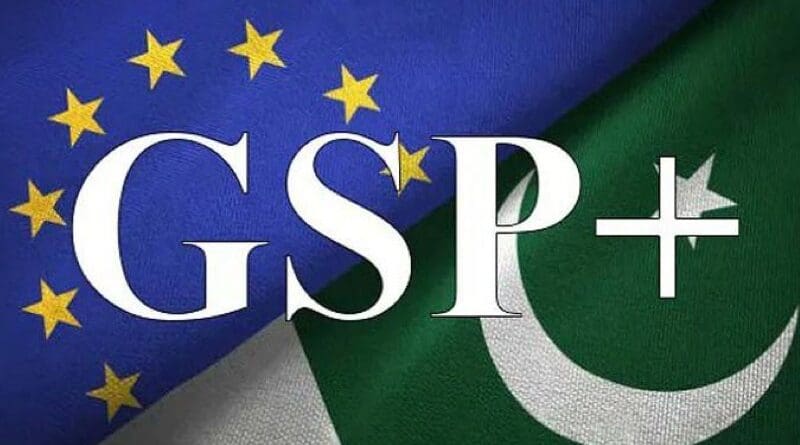
Central to the discussions was the Generalised Scheme of Preferences Plus (GSP+), extended until 2027. This is not merely a tariff concession. It is an instrument of economic statecraft that has re-anchored Pakistan’s export economy into European markets, with exports rising 108% since 2014.
For Pakistan, GSP+ has been nothing less than a developmental lifeline driving industrial growth, generating employment, and stabilizing foreign exchange inflows. For the EU, it has embedded leverage for normative alignment: requiring Pakistan to implement international conventions on labor rights, governance, climate, and human rights. The dialogue reaffirmed that trade in this context is inseparable from normative conditionality, creating a framework where economic access is tied to governance reform.
Brussels acknowledged Islamabad’s incremental reforms under GSP+, signalling that Pakistan is no longer viewed solely through a deficit lens but as a partner capable of aligning with international standards. The extension until 2027 therefore represents not only continuity but also institutional entrenchment of interdependence.
Counterterrorism as Collective Praxis
If trade framed the material pillar of the dialogue, counterterrorism defined the security pillar. Both sides unequivocally condemned terrorism “in all its forms and manifestations,” reflecting a convergence on security praxis.
Pakistan, having acted as a frontline state against violent extremism, emphasized the heavy sacrifices borne in its counterterror campaigns. The EU recognized this, positioning Pakistan not merely as a recipient of security assistance but as a knowledge partner with operational expertise in dismantling terror networks and counter-narcotics.
Yet the discourse also shifted beyond hard security. Islamabad stressed that long-term counterterror resilience requires investment in human capital—education, digital governance, and youth empowerment. Here lies scope for EU support, situating counterterror cooperation within a broader developmental security framework.
Migration and Mobility: Human Capital Diplomacy
The agreement to convene the 3rd Comprehensive Migration and Mobility Dialogue later in 2025 reflects a forward-looking dimension of Pakistan–EU ties. With a sizeable Pakistani diaspora in Europe, migration management is no longer framed solely as a challenge of irregular flows but increasingly as an arena of human capital diplomacy.
For Pakistan, this means securing channels for legal, skilled migration transforming remittances into structured contributions for development. For the EU, it offers a framework to address labor shortages while curbing irregular migration. In both cases, the human factor becomes central: migration is framed not as a security threat, but as an opportunity for structured cooperation.
Multilateralism and Strategic Balance
Threaded through the dialogue was a broader commitment to multilateralism. Both sides reaffirmed mutual respect, international law, and cooperative diplomacy as essential to global governance. For Islamabad, this posture is crucial it signals that Pakistan seeks not dependency but recognition as a constructive multilateral actor.
At a time when unilateralism and bloc politics threaten international institutions, the Pakistan–EU dialogue offered a counter-narrative: a balanced interregional partnership premised on cooperation rather than coercion.
Toward Structured Interdependence
The 10th Pakistan–EU Political Dialogue should be read as a marker of structured interdependence. GSP+ renewal entrenches trade as economic statecraft. Counterterrorism cooperation evolves into collective praxis. Humanitarian advocacy on Gaza and Ukraine positions both actors within global normative politics. Migration dialogues elevate human capital as a shared interest.
In all these domains, the Islamabad–Brussels nexus is shifting from episodic engagement to institutionalized partnership. The EU now recognizes Pakistan not merely as a peripheral state but as an actor central to South Asian stability and global governance debates.
For Pakistan, the dialogue reinforces a strategic identity: a state capable of aligning trade with reform, security with development, and diplomacy with humanitarianism. For the EU, it secures a partner in a volatile region whose stability is tied to Europe’s own strategic calculus.
In a fragmented international order, the Pakistan–EU dialogue demonstrates that principled, rule-anchored, and human-oriented diplomacy remains possible and indeed necessary. It offers a template for how interregional partnerships can move beyond aid and access to embody reciprocal recognition, strategic balance, and shared responsibility for peace.

Like what you read?
Please consider supporting Eurasia Review. Thank you for your consideration!
