
Competing For Influence: US Engagement In Central Asia’s New Power Balance – OpEd
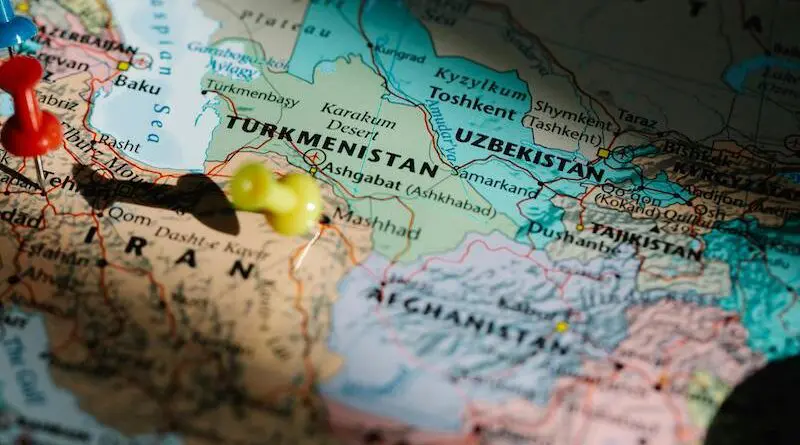
The November 2025 C5+1 summit in Washington, hosted by President Donald Trump, marked a strategic inflexion point in U.S. engagement with Central Asia. The summit united leaders from Kazakhstan, Kyrgyzstan, Tajikistan, Turkmenistan, and Uzbekistan to demonstrate Washington’s goal of increasing its presence in a region which Russia controlled security-wise and China dominated economically. The meeting demonstrated America’s drive to enhance its position through energy alliances and rare earth resource management and security agreements with regional partners, yet its enduring success faces challenges from Russian control and Chinese influence and domestic weaknesses in the five republics.
Initiated in 2015, the C5+1 format established a consistent dialogue between the United States and Central Asia. The 2025 summit, commemorating its tenth anniversary, marked the first instance in which all five leaders convened in Washington. The event demonstrated a fresh U.S. dedication to the field because worldwide energy markets evolved, and rare earth elements started playing a critical role in modern warfare technology. According to the U.S. Geological Survey, Kazakhstan and Uzbekistan hold 15 per cent of global rare earth reserves, and Turkmenistan and Tajikistan store vital supplies of natural gas and hydropower. Given that China controls over 60 per cent of global rare earth processing, Washington aimed to diversify its supply chains. The summit focused on energy matters through discussions about establishing joint ventures and investing in infrastructure, and creating common regulatory frameworks.
Security proved to be the most important requirement throughout the evaluation. The strategic position of Central Asia between Afghanistan and Russia, and China, makes it a crucial border area for counterterrorism operations and border control. The U.S. Department of Defence’s 2025 assessment identified the need for better intelligence-sharing and joint training because of the new instability in northern Afghanistan. The two countries with Russian military bases, Tajikistan and Kyrgyzstan, face ongoing risks of violence, while Uzbekistan has proven itself as a stabilising influence. The summit investigated security systems which protect national sovereignty while making countries more resistant to threats, according to multiple reports.
The United States achieved economic growth through its investments in infrastructure development and digital governance systems, and trade corridor expansion. The World Bank predicts Central Asia will keep its 4.2% average GDP growth rate from 2023 to 2025 because of commodity exports and remittances, but notes ongoing structural issues in the region. The United States proposed renewable energy projects and digital connectivity initiatives, and institutional reforms, which they presented as alternatives to China’s Belt and Road Initiative, which has invested more than $70 billion in regional infrastructure since 2013. The nation of Washington established itself as a sustainable growth partner through debt-free investment programs and capacity development initiatives.
However, multiple obstacles continue to exist. Russian influence operates through extensive military ties and cultural bonds, and institutional relationships. The Russian military operates permanent bases in Kyrgyzstan and Tajikistan, while the Collective Security Treaty Organisation determines defence strategies for the region. Russian energy networks link Kazakhstan and Turkmenistan to Moscow’s export routes, and the Eurasian Economic Union incorporates Kazakhstan and Kyrgyzstan into Russia’s economic sphere. The existing relationships between the United States and these countries make it difficult for Washington to support their development of separate security systems.
China demonstrates the same level of economic supremacy. Belt and Road projects have built new transportation and energy systems, which have made Beijing the biggest trading partner for all five republics. The external debt of Kyrgyzstan and Tajikistan has increased significantly because both countries now owe more than 40 per cent of their foreign debt to Chinese banks. The internal governance structure faces instability because of deep corruption and authoritarian rule, and insufficient institutional strength. The security threats from Afghanistan, combined with weak border control, create instability in the region, while the economy remains exposed to market fluctuations because of its dependence on commodities and remittances. Divergent national interests among the five states further obstruct regional integration.
The United States needs to implement a multifaceted approach to maintain C5+1 summit achievements while fighting against Russian and Chinese expansion. The region will reach Chinese supply chain replacement status through joint ventures that extract rare earth minerals and develop renewable energy projects. The government needs to establish debt-free investment programs which will support infrastructure development and digital governance initiatives to construct institutional capacity through transparent operations. Security cooperation demands the creation of protective measures which safeguard national sovereignty through non-intrusive methods that prevent military presence from creating security threats.
Washington needs to define its position as a stabilising force which provides diversification and autonomy to other nations instead of viewing it as a competitive zero-sum game. The United States can help Central Asia reduce its dependence on Russian military and energy networks and Chinese debt traps by demonstrating its reliability and transparency and its ability to understand local needs.
The 2025 summit will achieve more than symbolic value when Washington fulfils its existing commitments because it will create a permanent U.S.–Central Asia partnership. The United States should implement a combination of practical diplomatic efforts and ongoing financial support, and institutional development programs to assist the region in dealing with foreign dangers and internal vulnerabilities. The summit serves as a critical turning point which could transform Central Asia’s path while creating new opportunities for U.S. involvement in this region of disputed influence.
The opinions expressed in this article are his own.
References
- Azimov, K. I., & Izzatullayev, B. I. (2025). Digital diplomacy as US interests in Central Asia. American Journal of Public Diplomacy and International Studies, 3(4), 30-33.
- Wimbush, S. E. (2025). A new American strategy for Greater Central Asia. Central Asia-Caucasus Institute / American Foreign Policy Council.
- Khakimov, F. (2025). “C5+1” as a dovetailing mechanism for Central Asia’s regional integration: Insights from Uzbekistan. Economic Diplomacy, 3(1), 114-121.

Like what you read?
Please consider supporting Eurasia Review. Thank you for your consideration!
