
Beyond Fences: The Silent Crisis In Pak-Afghan-Taliban Relations – OpEd
It has been three years and two months since the Afghan-Taliban seized control of power, marking the third anniversary of their return on 15th August 2021. The Pakistani political leadership celebrated the U.S. withdrawal from Afghanistan. Former PM Imran Khan famously said, “They have just cast off the shackles of physical bondage.” Both political elites and establishment feel as if they have strengthened their western border, and Pakistan now has to address India and other internal challenges.
Pakistan also feels more confident that the threat coming from the TTP from the Afghan side is going to be nipped in the bud. This has instilled a sense of stability, with leaders seizing the opportunity to turn over a new leaf by focusing on economic development. However, in less than four years, Pakistan-Taliban relations have taken a nosedive. The threats from the western border loom larger and pose more dangers than those from India. Therefore, it is crucial to understand the underlying factors that are driving a wedge between these two historically close allies. Despite their past cooperation and shared interests, several issues are pulling them apart.
The Durand Line Dispute
The colonial legacy left behind in 1893 as a border between British India and Afghanistan has been the main sticking point between Pakistan and Afghanistan. After independence, Pakistan inherited the Durand Line from the British. Later on, Kabul withdrew from the Agreement and rejected the idea of Pakistan as a successor state.
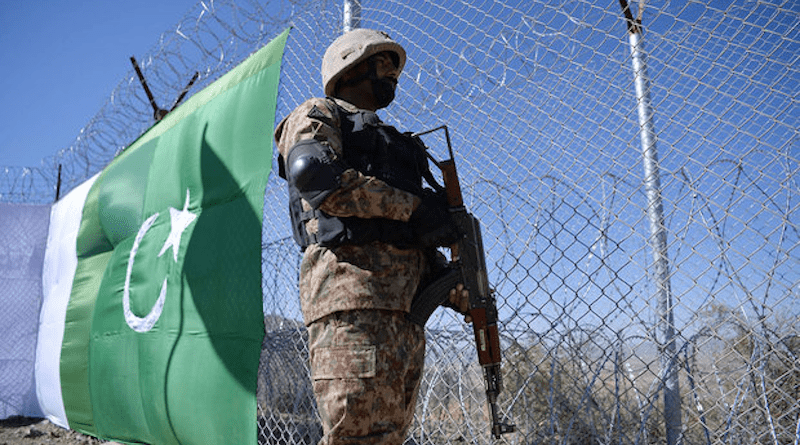
Since then, whether the pro-socialist class, the pro-democratic factions, the Taliban in 1996, or the Taliban in 2021, none of them have come to grips with the Durand Line as the de facto border between Pakistan and Afghanistan. In recent times, the Taliban have pulled down fencing in various areas. The Durand Line remains a bone of contention between the two entities, constantly stirring up tensions. This issue continues to rear its head, causing friction and keeping both sides at loggerheads
Taliban, TTP, and India’s Game: A Dangerous Triangle for Pakistan
The Indian mission against Pakistan is as clear as day. India wants to break down Pakistan and stir up as much instability as possible. Since the 1970s, there has been a strong perception among Pakistani political elites and the military establishment that India will leave no stone unturned to further split up Pakistan. The capture of Kulbushan Jadhav in Balochistan in 2016, a RAW spy, points to India’s efforts to fund and back up terrorist organizations in Balochistan. Pakistan claims the BLA and TTP are set up by RAW to bring about another Bangladesh scenario in Pakistan.
The book, “RAW: A History of India’s Covert Operations” by investigative journalist Yatish Yadav, states that RAW has recruited three of the most powerful warlords, including Ahmad Shah Massoud. However, they have kept the lid on the identities of two, who are still working towards India’s missions. For India, the TTP and BLA are bent on achieving their objectives, leaving no stone unturned in the process. Their tactics aim to wear down Pakistan’s stability, stirring up more chaos to carry out their plans.
With the Taliban back in power, the TTP has intensified its attacks against Pakistan. There is a feeling of triumph within the TTP, believing that if the Taliban can overthrow a sole super power, then they (TTP) can take down Pakistan. Data shows a dramatic rise in terror attacks within Pakistan, with incidents surging by 73% since the Taliban’s return to power. This situation has sparked many worries because this threat is coming straight from the Western front. However, Pakistan has borne the brunt of more weightage than direct Indian military attacks, and now finds itself in a tight spot. India’s presence on the Western front will not be put up with at any cost, as Pakistan is on high alert.
The most recent diplomatic meeting brought together Taliban’s foreign minister Amir Khan Muttaqi and defense minister Muhammad Yaqoob, along with the Indian delegate Jitender Pal Singh, stirring up much interest. During their November 4-5 visit to Kabul, they set the stage for future talks. Randhir Jaiswal, the foreign ministry spokesperson, pointed out during a weekly news conference in New Delhi on Thursday, “Both sides declared their common desire to strengthen ties and expressed their interest in further building up interactions between Afghanistan and India, hoping to turn over a new leaf.”
India’s presence and the Taliban’s diplomatic ties with India will not bring about a catastrophe for Pakistan. However, if India teams up with the Taliban to support and fund TTP, BLA, and IS-KP against Pakistan, then Pakistan will be forced to counter this threat at any cost. Pakistan might even intervene in Afghanistan’s politics to further create instability in the region, throwing a spanner in the works and causing a ruckus.
The TTP and RAW have had ties for a long time. Pakistan fears that this relationship is throwing a wrench into Pak-Afghan relations. The TTP and India nexus, along with their activities from the western border of Afghanistan, remain a hot potato in Pak-Taliban relations. This issue constantly stirs up tensions, keeping both sides at odds.
Afghan Refugee Repatriation
Under the caretaker government of former Prime Minister Anwar-Ul-Haq Kakar, Pakistan announced plans to round up all unregistered Afghan residents and send them back. The deportation order applies to all “unregistered foreigners” remaining in Pakistan as of November 1, 2023. This move raised eyebrows across the globe. Afghan citizens are most directly affected: more than 4 million reside in Pakistan, and an estimated 1.7 million are undocumented. This situation hits close to home for many, as they have lived there for decades, having fled Afghanistan in the 1980s during the country’s occupation by the Soviet Union. Many had put down roots in Pakistan, only to find themselves caught in the crossfire of political decisions.
This decision will also impact the fate of millions of documented Afghan refugees in Pakistan, leaving many to face the music. The decision was primarily driven by security concerns linked to terrorism and the resurgence of TTP in Pakistan after the Taliban took over Afghanistan, adding fuel to the fire. The government of Pakistan has said that near the Pak-Afghan border, the presence of these immigrants provides safe havens and asylum to TTP fighters, which has raised the alarm. Therefore, Pakistan feels their return to Afghanistan is crucial for its national security, believing it is a matter of life and death and must nip this problem in the bud.
Under this policy, an estimated 746,800 Afghans were deported from Pakistan by 1 April 2024. The policy has kicked up a storm as it clamps down on these migrants, forcing them to pack up and head out. As they make their way back to Afghanistan, the situation paints a grim picture of the ongoing humanitarian and political challenges.
The Taliban government has strongly condemned Pakistan’s decision, claiming it has added insult to injury by exacerbating the humanitarian crisis in Afghanistan. Given the fragile economy of Kabul, the mass return of refugees has further strained resources, prompting Kabul to call for international support. They point to similar pressures from Iran on Afghan migrants, arguing that these efforts to forcefully send back Afghan refugees undermine efforts to counter cross-border terrorism. This situation underscores the complex and multifaceted challenges facing the region.
In a conclusion, the deterioration of Pak-Taliban relations can be chalked up to a confluence of factors, including the TTP and the Indian nexus, the deportation of Afghan refugees, and the long-standing Durand Line issues. Each of these factors has played a key role in driving a wedge between the two entities. As the challenges drag on in the bilateral relationship, it becomes imperative for Afghanistan and Pakistan to steer through these troubled waters and focus on diplomatic solutions. To bring the regions closer to peace and set a shining example for others, they must mend fences, put their heads together, and pave the way for a stronger Pak-Afghan relationship.

Like what you read?
Please consider supporting Eurasia Review. Thank you for your consideration!
