
BNM’s UK-Wide Campaign – OpEd
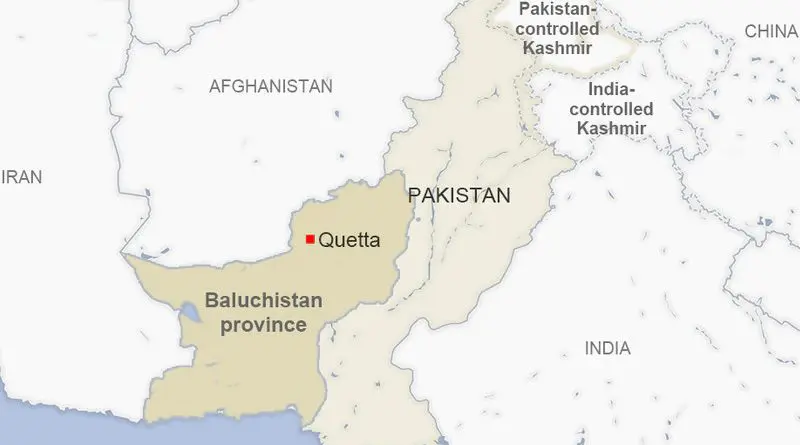
Between April 17 and 27, 2025, the UK will see a Baloch National Movement (BNM) UK wide campaign aimed to draw attention to the alleged human rights violations in Balochistan, and protest actions against the Baloch Yakjehti Committee (BYC). It is a campaign that is set to take place in Britain’s major cities and also includes a big social media push, aimed at bringing attention to the suffering in Pakistan’s Balochistan province. But, behind the mask of concern for human rights, there are a web of political interests and foreign influence that are one sided and do not reflect the real state of affairs that ground realities of the region are actually.
This campaign is driven by diaspora based activists with proven affiliation to proscribed terrorist outfit like Baloch Liberation Army (BLA) and Baloch Republican Army (BRA). The other two groups who have been involved in armed insurgency against the state have been involved in attacks that have killed civilians, security personnel and livelihood workers. Usually the BNM’s messaging often fits the rhetoric of militant fractions, as the proxy of the anti-Pakistan lobbies and foreign sponsors, not grounded in the experiences of the people of Balochistan.
The BNM fixated that the state is committing heinous crimes on its citizens but is silent on Baloch insurgents’ crimes. These groups have over the years carried out violent acts against innocent civilians including teachers, engineers, laborers who play a vital role socio-economically the province of Balochistan. The Jaffar Express hijacking incident was one of the most disturbing and that is when innocent passengers were being terrorized by high ranking officials, including insurgents who impose fear and violence to scare people into submission. However, the BNM is still refusing or minimizing this atrocities, creating doubts of its independency as an advocate.
The campaign to deal with missing persons has been another cornerstone of BNM’s campaign. Of course it is true that there have been instances of those forcibly disappeared, others are still investigated, but the story lacks nuance. Many of the missing who were first reported have later resurfaced, some have attached themselves to militant camps, others fled in order not to face legal accountability. Specifically, to look into verified cases of enforced disappearance, Pakistan has established the Commission on Enforced Disappearances that is working out to ensure justice where warranted. The BNM, however, politicizes a very sensitive matter by painting the issue in broad, accusatory strokes and derails any potential routes toward resolution.
And ironically, at present Balochistan is witnessing unprecedented developments, something which is often being overlooked by the international campaigners. Large scale initiatives like the China Pakistan Economic Corridor (CPEC), the expansion of Gwadar Port, exploitation of Reko Diq minerals, road infrastructure and education projects are weaving the region into the national and global economic fabric more closely. The government has granted thousands of Baloch students scholarships to go to higher education at home and abroad. These developments are a welcome focus on economic inclusion and empowerment, which go entirely unmentioned in the BNM’s protests.
The BNM paints the Baloch Yakjehti Committee’s recent action as a crackdown on dissent but the facts do not back that. They only introduced, after BYC leaders were found to be gathering illegally, instigating unrest, and keeping contact with separatist networks. As long as it is incitement or threats to national integrity under the guise of peaceful protest, no democratic society permits any of this. Here, then, is the state’s response which is not repression but the legitimate pursuit of the law and order.
The macabre irony in the BNM’s selective activism is that it refuses to word its condemnation of acts of terrorism by Baloch insurgents. The Baloch take silence to suicide bombings, targeted killings and attacks on foreign workers, who are mostly engaged in projects to improve the lives of common Baloch. There are no details on how the political bias or moral inconsistency in their narrative manifests, especially with this glaring omission. Human Rights are really about if you do not take care of the suffering done by the non-state actors, why concern yourself about suffering done by state actors?
In many ways, it is political theatre to be rolled out in London and the other UK cities to influence public opinion in foreign capitals rather than improving the lives of people back home. These protests funded and supported by external sponsors are not legitimate since they are not protests of grassroots people. In recent years, ordinary people of Balochistan are increasingly getting in touch with the state, are educated, lead the local governing apparatus and want the best for Pakistan. Well-funded campaigns abroad are speaking louder than their voices as they primarily cater to a particular political agenda.
There won’t be real and lasting change in Balochistan delivered through social media hashtags or protests staged in foreign cities. There will be no escape if it is forged through open dialogue, democratic participation, and development. Balochistan should continue to be integrated into Pakistan through education, infrastructure and economic opportunities and not distorted. Peace over propaganda and polarization that’s what those that really care about the region’s future have to spend their time on.

Like what you read?
Please consider supporting Eurasia Review. Thank you for your consideration!
