
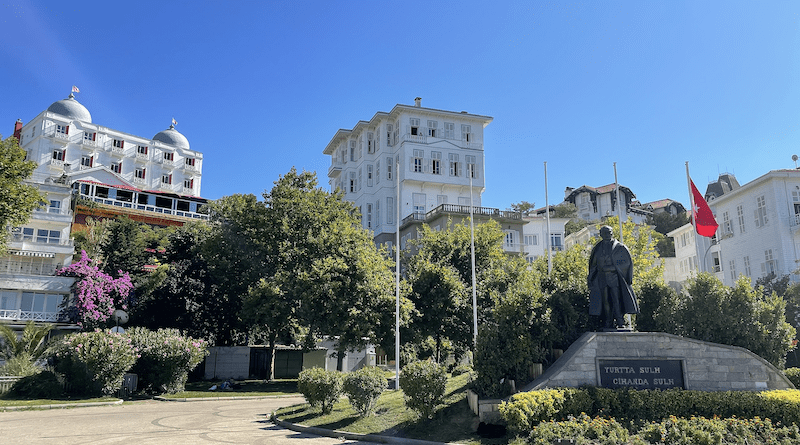
Spring In Prinkipo: When Silence Yields To The Sound Of Construction – OpEd
Spring on Prinkipo Island (near istanbul) isn’t just the awakening of nature—it’s also the awakening of concrete, tools, and the ceaseless hum of machines. After a quiet winter, the island’s streets take on a new energy with the arrival of the season. In the town centre, a wave of renovation has begun. Shops are changing hands, new tenants are reshaping their spaces, and shopkeepers are busy preparing for the summer months.
But this renewal comes at a cost: the sense of tranquillity so deeply woven into the fabric of the island is being disturbed. The shrill sound of drills echoes through the narrow streets. Clouds of plaster and metal dust drift through the air. Visitors who come in search of peace and quiet find themselves in the middle of a construction site.
With the introduction of electric vehicles, once-remote areas that could only be reached by foot or horse-drawn carriage are now easily accessible. Roads that were too steep even for the old faytons are now open to delivery trucks and construction crews. While this shift has boosted the local economy, it has also eroded a sense of intimacy and seclusion.
From the early morning hours, the island is filled with clattering, buzzing, and grinding. Lawnmowers roar to life, trimming vast stretches of grass. The cuttings are packed into sacks and sold to animal owners as feed. It seems we must be quite wealthy, to spend so much time and energy keeping up with the endless chore of lawn care—even at dawn!
Beyond the back gardens lies Hristos Hill, telling a different story. Nourished by spring rain, wild grass and plants grow freely. No one interferes. Nature is left to its own rhythm—flourishing in spring, drying out in summer, and reviving again in autumn. The only constant presence is the litter left behind by humans.
In summer, day-trippers from the city arrive with picnic baskets and plastic bags. They enjoy the view, then leave their rubbish behind—plastic packaging, bottles, cigarette butts. Once again, the task of cleaning up falls to the locals or the few who still care. Rain sometimes washes the mess away, but plastics persist stubbornly.
Prinkipo is increasingly becoming a battleground between nature and human activity. And in this quiet war between serenity and noise, it’s still unclear who will emerge victorious.

Like what you read?
Please consider supporting Eurasia Review. Thank you for your consideration!
