
Afghanistan: The Epicenter Of Terror Financing And Arms Smuggling – OpEd
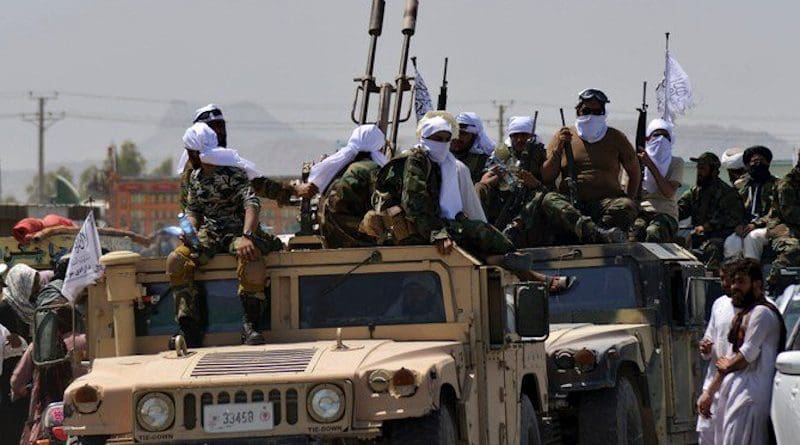
Since the US withdrawal from Afghanistan in August 2021, Afghanistan has become a hub of supplying arms and finance to terrorist’s groups under the Taliban administration. The hasty collapse of previous government left behind the stockpiles of military equipment, various international reports have highlighted that these weapons have fallen into the hands of militant groups due to their close alliance with Taliban regime.
Simultaneously, illegal financial networks run by drug trafficking, illicit mining, and foreign sympathizers have strengthened, allowing the terrorists groups to exert and expand their influence across the South Asian region. With porous and terrain borders and weak state controls, Afghanistan has become a critical node in the global terrorism supply chain, posing a severe threat to regional and international peace and security.
On 12th Feb 2025, the 35th UNSC Sanctions Monitoring Team report pointed out that Afghanistan is an epicenter of terrorism. The major findings of the report revealed that the Tehrik-i-Taliban Afghan (TTA) provides financial and operational support to Tehrik-i-Taliban Pakistan (TTP), and Noor Wali Mehsud the Chief commander of TTP is getting $43,000 monthly from TTA. Terrorists and extremists’ organization like ISIS, ETIM, Al-Qaeda, and BLA have safe havens in Afghanistan, whereas TTP is establishing new training centers in Kunar, Nangarhar, Khost, and Paktika. Pakistan’s security concerns are validated, with TTP responsible for 600 attacks in just six months. The Taliban’s denial stands exposed as their complicity fuels cross-border terrorism.
Moreover, a recent audit in Badghis has exposed that a large cache of US made weapons is missing from the Afghan army depots of the 3rd Brigade HQ, 207th Al-Farooq Corps. The stolen arms, including AK-47s, M16s, M4s, Beretta pistols, and thousands of rounds of ammunition, raise serious security concerns. Multiple reports confirmed that over the past three years, US abandoned weapons in Afghanistan have fallen into the hands of militants’ organization particularly TTP, proving Afghan soil remains a hub for arming terrorists. In 2024, the Pakistan security forces have recovered US dollars and foreign made ammunition from terrorists’ groups, further prove Afghanistan is a main supplier of weapons to terrorists’ groups. Stolen weapons from Afghan army depots are landing in the hands of terrorists, proving Pakistan’s warnings about militant safe havens in Afghanistan were never baseless. The killing of Badruddin from Afghanistan’s Al-Farooq Corps, fighting for TTP with US weapons, exposes the Afghan Ministry of Defense’s complicity.
Pakistan’s government has highlighted at various occasions that the presence of US advance weapons in Afghanistan, left behind in the aftermath of the withdrawal of its troops has been an issue of profound concern for the safety and security of Pakistan and its citizens. These weapons have been used by terrorist organizations, including the TTP, to carry out terrorist attacks in Pakistan. Pakistan’s warnings about terrorist safe havens in Afghanistan stand vindicated. The interim Afghan government (IAG) has repeatedly dismissed requests from Pakistan to rein in the TTP. Without swift action, unchecked extremism will keep threatening regional peace. Additionally, on 15th February 2025, Dr. Muhammad Asif Siddiqui, former Meshrano Jirga member, in an interview with Amu TV revealed that with the assistance of Afghan Taliban, al-Qaeda has increased its influence in Afghan villages, particularly in Kabul. He also exposed the frequent meeting between Taliban and al-Qaeda and their financial backing. The killing of Ayman al-Zawahiri in Kabul in 2022 is a proof of their close alliances. These statements, however, invoke serious apprehensions about Afghanistan’s security landscape during the Taliban’s rule.
Furthermore, Mushtaq alias Kohi, a senior commander of the Baloch Liberation Army’s (BLA) Majeed Brigade, has been stabbed to death in Kabul, Afghanistan, marking a significant setback for the terrorist group. Kohi had strong ties with Aslam Baloch (Aslam Acchu), the former BLA leader killed in a 2019 suicide bombing in Kandahar. A key member of the BLA’s Command Council, Kohi played a central role in orchestrating terrorists attacks on Pakistani security forces, infrastructure and Chinese national on its soil. It indicates that Afghanistan under Taliban rule remains the actual hub of these extremist elements.
Therefore, the recent Trump’s demand for the retrieval of US weapons left behind after the withdrawal of US troops is legitimate. However, the Taliban regime seems unresponsive to US concerns over the return of abandoned weapons. These abandoned weapons have led the South Asia region towards more instability because it has empowered the terrorists’ groups like TTP, ISKP, and BLA by creating a weapons black market in Afghanistan. Pakistan has also observed increased in terrorists’ attacks since the Taliban’s take over the Kabul and also recovered US-made weapons from militants. While Trump’s call for weapon recovery is valid, expecting Taliban cooperation is unrealistic. The issue demands urgent global attention to address regional security threats.
The international community must act swiftly to prevent Afghanistan from becoming a global terror launchpad. The unchecked flow of US left over weapons in the hands of terrorists groups is alarming and should be a wakeup call for international community for decisive action. The unregulated flow of arms and illegal financial support has already flourished the terrorists’ networks, that are creating instability across South Asia and beyond. The US and regional partners must collaborate and enforce strict measures on arms smuggling and hold the Taliban regime accountable for the illicit support to the terrorists’ groups. Without decisive international action ranging from stricter financial oversight to enhanced border security this crisis will only deepen, allowing terrorism to thrive unchecked. The world cannot afford to turn a blind eye decisive, unified action is the only way to prevent history from repeating itself.

Like what you read?
Please consider supporting Eurasia Review. Thank you for your consideration!
