
A Regional Earthquake: How America Unleashed Israel’s War On Iran And What Comes Next – OpEd
The recent outbreak of war between Israel and Iran was not a surprise. Rather, it was the natural and dangerous consequence of a long and unbroken trajectory of escalating tensions centered on Iran’s nuclear ambitions.
For years, Israeli leaders had warned that Iran was approaching a “nuclear breakout capability”—the point at which Tehran could quickly produce a nuclear weapon. When intelligence reports in early 2025 pointed to accelerated uranium enrichment and development of sensitive components, Israel launched “Operation Rising Lion,” a decisive preemptive strike.
But to understand the deep roots of this confrontation, we must revisit the nuclear debate in Iran, particularly during the presidency of Mohammad Khatami. This period was a turning point not only for the internal direction of Iran’s nuclear program but also for the country’s response to mounting international pressure.
A National Project, Not a Weapon
During the Khatami era, two separate yet intertwined nuclear discussions unfolded in Iran. One revolved around decisions about the scope of the program itself. The other was focused on how Iran should respond to Western demands and diplomatic threats.
Domestically, the Iranian public overwhelmingly supported the country’s civilian nuclear program. Seen as a symbol of national pride and technological self-sufficiency, it represented a pivot away from an oil-dependent economy. Any move toward weaponization, however, was widely viewed as a security liability.
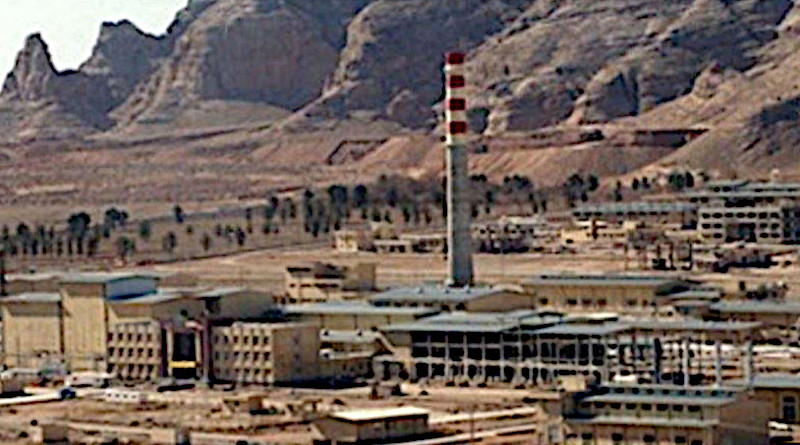
Iran’s nuclear journey began in earnest in the late 1980s under President Akbar Hashemi Rafsanjani. By 1994, Iran had signed an agreement with China to build two 300-megawatt power reactors and a uranium conversion facility (UCF) in Isfahan. But U.S. diplomatic pressure led to the cancellation of this deal in 1997.
By the mid-1990s, Iran’s Atomic Energy Organization (AEOI) shifted its focus. The goal was now to generate 7,000 megawatts of electricity through domestic nuclear fuel. Khatami chaired the Supreme Council of Technology to oversee this pivot. When China walked away from the UCF project, Iran decided to build it independently in 1999 with public and private sector assistance. Construction began in 2004, and uranium conversion to UF4 (and later UF6) was carried out rapidly—often within weeks.
These technical strides occurred in parallel with diplomatic negotiations and mounting pressure from the EU and the United States.
The West’s Missed Opportunity
Despite intense international scrutiny, Iran repeatedly emphasized that it would not abandon enrichment, even as it offered reassurances of peaceful intent. The Khatami government signaled a willingness to cooperate with the International Atomic Energy Agency (IAEA) and negotiate substantive guarantees.
In August 2005, Iran resumed uranium conversion at the Isfahan facility. Iranian negotiators maintained that their suspension of enrichment was temporary and voluntary—intended solely as a goodwill gesture. But Europe insisted on a permanent halt to key nuclear activities.
The EU’s failure to respond substantively to Iran’s proposals may have been calculated. Many in Europe anticipated that the June 2005 presidential election would bring Rafsanjani back to power—a figure viewed as more amenable to compromise. That gamble failed.
By 2006, negotiations collapsed. In the following years, Iran increased its capabilities, even as economic sanctions mounted. The 2015 nuclear deal, known as the Joint Comprehensive Plan of Action (JCPOA), was a rare success. It limited enrichment levels to 3.67%, drastically reduced stockpiles, and imposed inspections.
That deal was dismantled in 2018 by the Trump administration. When President Biden attempted to revive negotiations, the talks collapsed by 2022. In the aftermath, Iran’s nuclear stockpile and enrichment levels surged to new highs. By 2023, the IAEA detected particles enriched to 83.7%. By 2024, Iran’s 60% enriched uranium stockpile had reached 408 kilograms—enough for nine nuclear weapons if fully enriched.
The War Arrives
On June 2025, the long-anticipated conflict erupted. The U.S. reportedly enabled Israeli action using its vast network of regional bases. At 3:30 a.m., explosions rocked Tehran. Israel claimed its airstrikes targeted dozens of military and nuclear sites. Prime Minister Benjamin Netanyahu announced the beginning of “Operation Rising Lion,” declaring it a critical moment in Israel’s history.
Iran responded with 11 waves of retaliatory strikes between June 13 and 16, launching over 370 ballistic missiles and 100 drones. The counterattacks inflicted damage on Israeli infrastructure but were also calibrated to avoid escalation that could draw in broader international involvement. Meanwhile, Israeli strikes reportedly disabled key Iranian underground missile bases.
Strategic Calculations and International Law
Despite heavy losses, Iran did not expel IAEA inspectors or withdraw from the Nuclear Non-Proliferation Treaty (NPT). Hardliners in parliament called for such measures, but Iran’s leadership appears to view continued participation in the NPT as a strategic necessity. Doing so prevents Israel from making a credible legal case that Iran has crossed into weaponization territory.
Israel’s airstrikes—absent an imminent nuclear threat—could be seen as violations of international law. Tehran’s restraint may be tactical, designed to preserve diplomatic cover even while pursuing its regional objectives.
Civilian Infrastructure and Psychological Warfare
What distinguishes this war from past conflicts is the degree of civilian targeting. Over 220 Iranian civilians have reportedly been killed. Critical infrastructure, including hospitals, the national power grid, and state media headquarters, has been damaged. These strikes appear aimed not just at military targets, but at demoralizing the Iranian population—a “nationalization of war,” as some Iranian analysts describe it.
Netanyahu’s government issued evacuation warnings in Tehran, echoing tactics previously used in Gaza and Lebanon. This is warfare not just by force, but by fear.
What Comes Next?
Despite Iran’s damage, its strategic arsenal remains potent. New technologies—such as the Shahed-107 drone, with a 1.5-ton warhead—point to capabilities not yet fully deployed. Yet Iran is biding its time, engaging in a war of attrition, and carefully avoiding full-scale escalation.
But the risk of miscalculation is growing. If Iran enriches further or escalates its military responses, civilian casualties will rise—and so too will the global stakes.
The question that now confronts the region is chilling in its simplicity: will the United States allow panic to become policy? Will it exploit chaos to destroy what remains of Iran’s nuclear infrastructure? Or will it push for a negotiated de-escalation before the Middle East is dragged into a wider, irreversible war?
The impact on Middle East
The eruption of open war between Israel and Iran has shattered decades of precarious balance in the Middle East. While the strikes and counterstrikes dominate headlines, the broader repercussions—strategic, political, and economic—are now rippling across neighboring states and reshaping the region’s fragile security architecture.
In Lebanon, Hezbollah faces growing pressure to escalate. As Iran’s most powerful proxy, the group’s silence or inaction risks undermining its legitimacy in the eyes of its base and Tehran. However, any large-scale Hezbollah retaliation against Israel would likely trigger a devastating Israeli response in Lebanon, compounding an already catastrophic economic crisis.
In Syria and Iraq, where Iran has cultivated deep influence through military, political, and economic channels, Israeli airstrikes on IRGC and militia assets have intensified. That can renewed chaos .
For the Gulf States—particularly Saudi Arabia and the United Arab Emirates—the conflict presents both an opportunity and a threat they understand that escalation could expose their own energy infrastructure to Iranian retaliation. As a result, the Gulf monarchies are adopting a posture of silent containment—heightened alertness without direct engagement.
In Yemen, the Iran-aligned Houthi rebels are already signaling escalation. Their drone and missile attacks could target not only Israeli interests but also energy infrastructure in Saudi Arabia or the UAE. Such actions would further disrupt Red Sea shipping lanes, destabilize the Horn of Africa, and risk provoking a broader military response.
The Palestinian issue is also reignited by the war. As Israeli operations against Iran intensify, regional Arab publics are expressing anger not only at Israel, but also at Arab governments that normalized ties with it under the Abraham Accords. Domestic pressure is rising in countries like Jordan, Egypt, and Morocco, and support for the Palestinian cause has reemerged as a symbol of resistance. In Gaza and the West Bank, there is growing potential for unrest, as militant groups may feel emboldened by Iran’s direct confrontation with Israel. Meanwhile, countries like Turkey and Qatar are attempting to walk a diplomatic tightrope.
If Iran threatens the Strait of Hormuz or if hostilities reach Gulf pipelines, the result could resemble the energy shock of 1973. China and India—key Iranian oil buyers—are watching closely, as their energy security hangs in the balance. These powers may soon be forced to engage diplomatically, not out of alliance
The wider Middle East is entering a period of unprecedented volatility. The longer the Israel–Iran war continues, the greater the chances of miscalculation, accidental escalation, and regional spillover. Already fragile states risk being overwhelmed. Proxy groups may evolve into principal combatants. And the logic of deterrence that once held this confrontation at bay is unraveling.

Like what you read?
Please consider supporting Eurasia Review. Thank you for your consideration!
