
Treaty Undone: India’s Strategic Defection – OpEd
The Indus Waters Treaty (IWT), a landmark agreement brokered by the World Bank in 1960, has long been hailed as a rare model of cooperation between arch-rivals India and Pakistan. Despite multiple wars and enduring hostility, the treaty has survived as a testament to the resilience of rules-based diplomacy in South Asia. But that legacy now stands at risk.
India’s decision to unilaterally suspend the Indus Waters Treaty following the April 2025 Pahalgam attack represents not just a diplomatic overreaction, but a strategic defection from international treaty obligations. The move—premised on unverified allegations of Pakistan’s involvement in the attack—is a violation of Article XII(3) of the treaty, which stipulates that the agreement can only be altered or terminated through “a duly ratified treaty concluded for that purpose between the two governments.” No such treaty has been signed. No mutual consultation has occurred. Yet, the unilateral abeyance is now a reality.
India’s announcement came swiftly, accompanied by the closure of the Attari border, mass visa cancellations under the SAARC Visa Exemption Scheme, and the expulsion of Pakistani diplomats. These drastic escalations were undertaken without conclusive evidence linking Pakistan to the Pahalgam incident. Instead, the Indian government has clung to vague accusations of cross-border terrorism, which remain unsupported by forensic or intelligence disclosures. Even Indian media and security agencies have offered little beyond repetition of the official line, while the name of the group allegedly involved—’The Resistance Front’—remains poorly substantiated.
This is not the first time India has invoked crisis-induced nationalism to pursue coercive diplomacy. The Balakot incident of 2019, the revocation of Article 370, and the 2020 Ladakh clashes have all been moments where Delhi converted internal or border tensions into opportunities for domestic consolidation and foreign posturing. What is different this time is that India has breached an internationally witnessed treaty, moving from rhetorical escalation to a substantive violation of international legal commitments.
This action is part of a wider phenomenon in global politics best described as “treaty opportunism”—where states unilaterally reinterpret, suspend, or abandon binding commitments in response to short-term strategic goals. In doing so, they erode the very structure that underpins multilateralism. India’s suspension of the IWT is a textbook case: a calculated defection from institutional norms under the guise of national security. The implications are immense—not only for Pakistan but for all states engaged in shared natural resource governance.
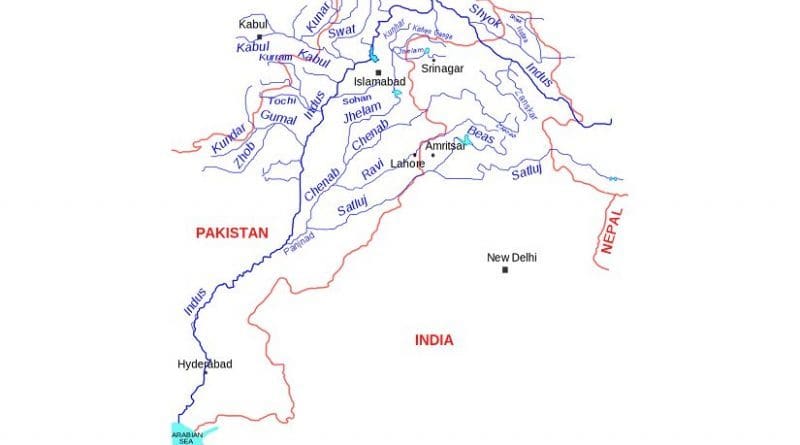
It is important to remember that the IWT allocates water from three eastern rivers (Ravi, Beas, and Sutlej) to India, and from three western rivers (Indus, Jhelum, and Chenab) to Pakistan. The stakes for Pakistan, especially its agricultural and water-stressed provinces of Punjab and Sindh, are high. If India persists in violating or manipulating the treaty, the downstream effects on Pakistan’s food security, irrigation infrastructure, and hydrological balance could be catastrophic.
The humanitarian dimension cannot be ignored either. Suspending water-sharing in a region already grappling with climate stress and resource depletion is an act of collective punishment, not a proportional diplomatic measure. As Senator Sherry Rehman rightly pointed out, this is not just a legal breach but a moral transgression—the weaponization of water, historically considered a common and apolitical good.
Moreover, this action undermines South Asia’s fragile regionalism. The weakening of SAARC, largely due to India’s geopolitical behavior, has already eroded avenues for dialogue. The suspension of the IWT further dismantles the last functional bilateral mechanism that withstood the test of time. In effect, New Delhi has chosen disruption over dialogue, compounding mistrust rather than addressing the root causes of insecurity.
India’s move also places the World Bank in a position of responsibility. As a guarantor of the IWT, it cannot remain passive in the face of this breach. It must seek clarifications from India, reaffirm the binding nature of the treaty, and call for immediate diplomatic recourse. Likewise, the United Nations, International Court of Justice, and other multilateral forums must treat this as a violation of the broader international legal order.
In conclusion, India’s suspension of the Indus Waters Treaty represents a dangerous regression in South Asia’s already fragile security architecture. It is a move that reflects not strength, but desperation—using a false flag narrative to justify an illegal strategic maneuver. The world must recognize this for what it is: a breach of law, a threat to peace, and a step toward regional destabilization. Upholding international treaties is not optional—it is the bedrock of civilized diplomacy. And when that bedrock is fractured, the consequences ripple far beyond the rivers of the Indus basin.

Like what you read?
Please consider supporting Eurasia Review. Thank you for your consideration!
