
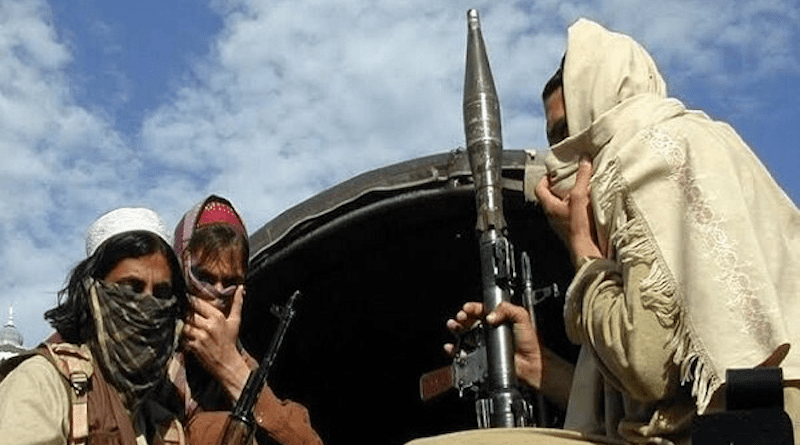
A Fragile Peace: The Growing Threat Of TTP To Pakistan’s Stability – OpEd
Tehrik-i-Taliban Pakistan (TTP), a militant organization operating from Pakistan-Afghanistan border represents a significant threat to the internal stability of Pakistan. In the past Pakistan has launched various operations including Operation Rah-e-Haq, Operation Rah-e-Rast, Operation Rah-e-Nijat, Operation Zarb-e-Azb and Operation Radd-ul-Fasaad to root out the militant organization.
Although Pakistani military actions, U.S. drone warfare, and factional infighting led to the TTP’s decline from 2014 to 2018, the militant group has been experiencing a strong resurgence since the Afghan Taliban’s takeover. Currently, the militant groups like Al-Qaida, ISIS, TTP and Daesh have save havens in Afghanistan and they are openly operating from Afghan land. TTP has sanctuaries in Afghanistan especially in Kunar and Nuristan provinces; a terrain area. Therefore, Pakistani government have increased pressure on Kabul to control TTP’s activities from their soil, but Taliban regime is reluctant to act against TTP.
For years, Pakistan has sounded the alarm about the Tehreek-e-Taliban Pakistan (TTP), emphasizing its escalating threat not just within our borders but potentially on a global scale. Recently, a comprehensive report prepared by the US intelligence agencies highlighted that in South Asia, the TTP operations have focused exclusively on targeting the Government of Pakistan, probably to avoid drawing more counterterrorism pressure. However, TTP’s capabilities, historical ties to al-Qaida, and previous support to operations targeting the United States keep us concerned about the potential future threat. Pakistan has been informing the international community, including the United States, about the global threat posed by the TTP. Therefore, regional and international players have largely viewed the group as a threat confined to Pakistan.
This recognition is not only a validation of Pakistan’s longstanding concerns but also a call for a global unified response to tackle the menace posed by TTP. The group’s resurgence, particularly after the Taliban’s takeover in Afghanistan, has emboldened its operations. Operating with impunity from Afghan soil, TTP has intensified its attacks within Pakistan, leading to significant casualties among civilians and security personnel alike. The United Nations has reported that the Taliban’s support TTP has grown, pointing to a surge in cross-border attacks into Pakistan and highlighting the Taliban’s failure to restrain the group’s actions. At the same time, the situation in Afghanistan has become increasingly unstable. The return of groups like al-Qaeda and ISIS-K, alongside the TTP, has sparked serious concerns that Afghanistan may once again serve as a safe haven for terrorist organizations with global ambitions.
The international community’s acknowledgment of TTP’s expanding threat underscores the need for collaborative efforts to combat extremist violence beyond Pakistan’s borders. Recognizing TTP as a broader security threat can serve as a catalyst for renewed US-Pakistan counterterrorism collaboration. It opens avenues for intelligence sharing, joint operations, and strategic dialogue. Such cooperation could help curb regional militancy and promote stability in South Asia. Strengthening this partnership may also improve broader diplomatic and defense relations between both countries.
Pakistan, as a responsible and internationally recognized state, continues to play a key role in global counterterrorism efforts. In a significant development, Pakistani authorities recently apprehended Muhammad Sharifullah, a key figure involved in orchestrating the August 2021 Kabul Airport attack. Demonstrating its commitment to international cooperation, Pakistan handed over the suspect to the United States. This action earned commendation from former U.S. President Donald Trump, marking a rare moment of praise and reflecting positively on Pakistan’s role in promoting regional and global security.
In light of the increasing threat posed by the Tehrik-i-Taliban Pakistan (TTP), it is crucial for Pakistan and its international partners to adopt a more integrated and proactive approach to counterterrorism. The growing presence of TTP and other extremist groups in Afghanistan underscores the need for stronger regional cooperation, with a focus on intelligence sharing, border management, and disrupting terrorist financing networks. Pakistan should continue pressuring the Afghan Taliban to take concrete steps in dismantling these militant sanctuaries, while also working with neighboring countries to ensure a united front against cross-border terrorism.
Furthermore, it is essential for the international community to recognize TTP as a global security threat and not just a regional issue. By strengthening diplomatic ties and fostering multilateral collaborations, the international community can provide crucial support in Pakistan’s efforts to counter the TTP’s growing menace. A sustained and unified approach will not only safeguard Pakistan’s stability but also contribute to broader peace and security in South Asia and beyond. Effective counterterrorism strategies will require a combination of military action, political will, and global solidarity to prevent further escalation of extremism.

Like what you read?
Please consider supporting Eurasia Review. Thank you for your consideration!
